Program Info
Tom, Tom, The Piper's Son and others
Films by Ken Jacobs
Sunday, Nov. 8th · 1PM
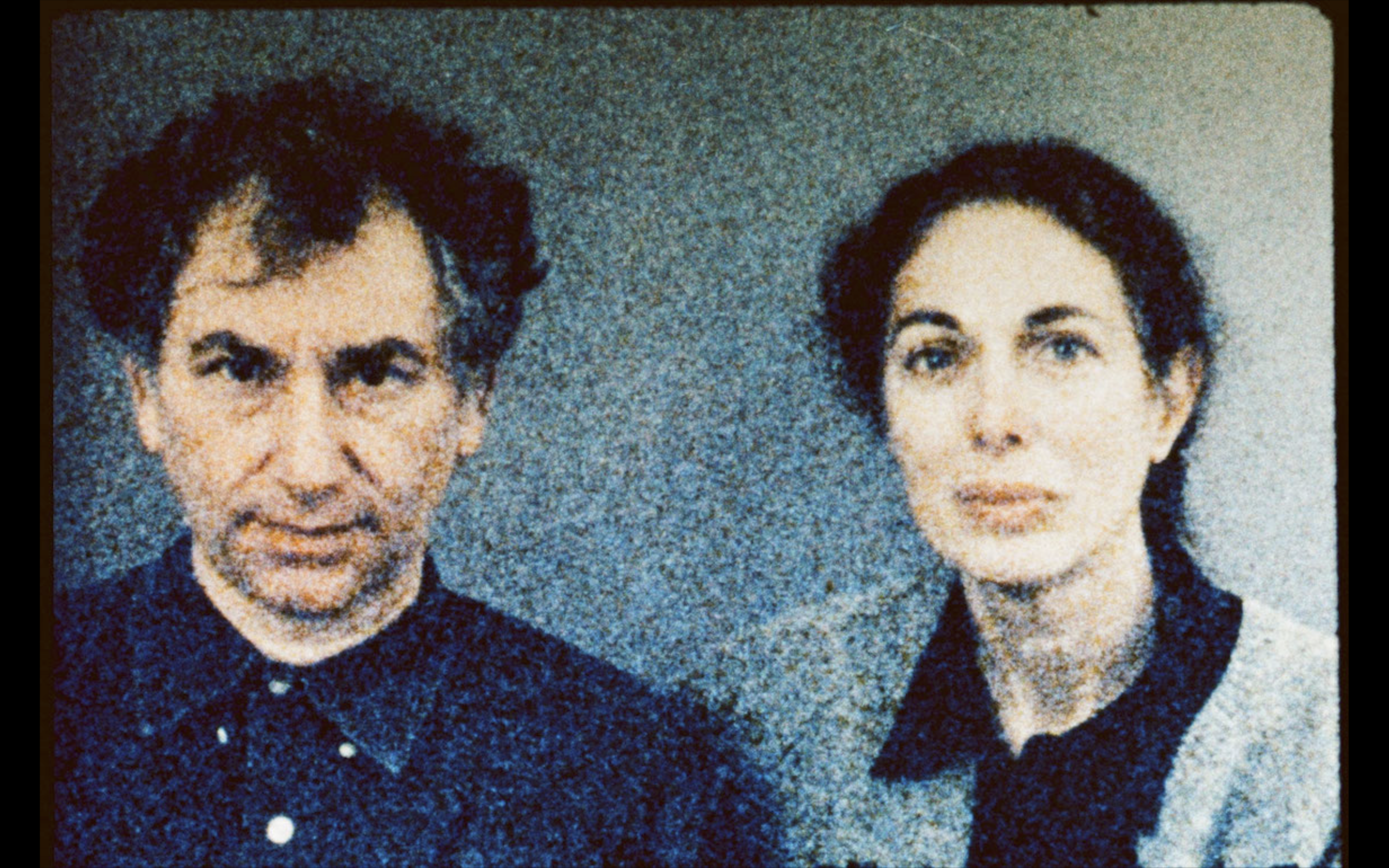
RPM Festival and the Brattle Theatre join together to pay tribute to two of experimental cinema’s most beloved and influential figures, Ken Jacobs (1933–2025) and Florence “Flo” Jacobs (née Karpf, 1941–2025). The screening honors their extraordinary artistic partnership and decades of groundbreaking work that challenged cinematic conventions and expanded the boundaries of moving-image art.
A heralded filmmaker, distinguished professor at SUNY Binghamton, and defining presence in avant-garde cinema for decades, Ken Jacobs left an indelible mark on global film culture. His anarchic and uncompromising works—including BLONDE COBRA (1963), STAR SPANGLED TO DEATH (1956/2004), and the structuralist masterpiece TOM, TOM, THE PIPER’S SON (1969)—redefined how audiences experience, perceive, and understand cinema.
Beginning with FLO ROUNDS A CORNER (1999), Jacobs also produced a remarkable stream of mind-bending digital videos that, in many ways, brought his artistic practice full circle to his early days as a painter. His lifelong investigation of movement, perception, texture, and the material properties of images remains central to his enduring influence.
Florence Jacobs was Ken’s partner in life and an essential collaborator throughout his artistic journey. Beginning in the mid-1960s, the pair developed pioneering live-cinema and shadow-play performances that transformed film projection into an unpredictable, immersive art form. Through their double-projection “nervous system” and their “nervous magic lantern,” which conjured phantasmagorical three-dimensional images, Ken and Flo created singular, homespun spectacles that pushed the possibilities of analog film and digital cinema far beyond conventional limits.
At the heart of this tribute is Ken Jacobs’s TOM, TOM, THE PIPER’S SON, a radical and enduring work that transforms a 1905 Biograph short into an essential cinematic experience. Through re-photography and meticulous manipulation of the original footage, Jacobs reveals dimensions hidden within the film’s seemingly simple images, bringing their surface textures, intricate structures, and spatial depth into startling relief. His approach reflects an enduring interest in painting and perception, shaped in part by his studies with the influential painter Hans Hofmann.
The film also brings renewed attention to the physical traces of cinema and the lives preserved within its images. Jacobs draws out the energetic performances of the original actors, whose silent-film gestures predate even the innovations of D. W. Griffith, transforming them into haunting, almost ethereal presences. Although viewers encounter the original film in its entirety for a second time through an altered perceptual experience, the work’s symphonic coda offers a poignant final gesture: a farewell to Tom, Tom, marked by white leader and a visible splice.
Together, Ken and Flo Jacobs created a body of work that remains as challenging, playful, and visionary as ever. This tribute celebrates their extraordinary contributions to experimental cinema and their shared commitment to discovering new ways of seeing.
16mm Prints from The Film-Makers' Cooperative (NYC)

Perfect Film
16mm, B&W, Sound, 22 mins, 1986
Tom, Tom, The Piper's Son
16mm, Color + B/W, Silent, 115 mins, 1969
Little Stabs at Happiness
16mm, Color, Sound, 15 mins, 1962
Total Runtime: 152 min

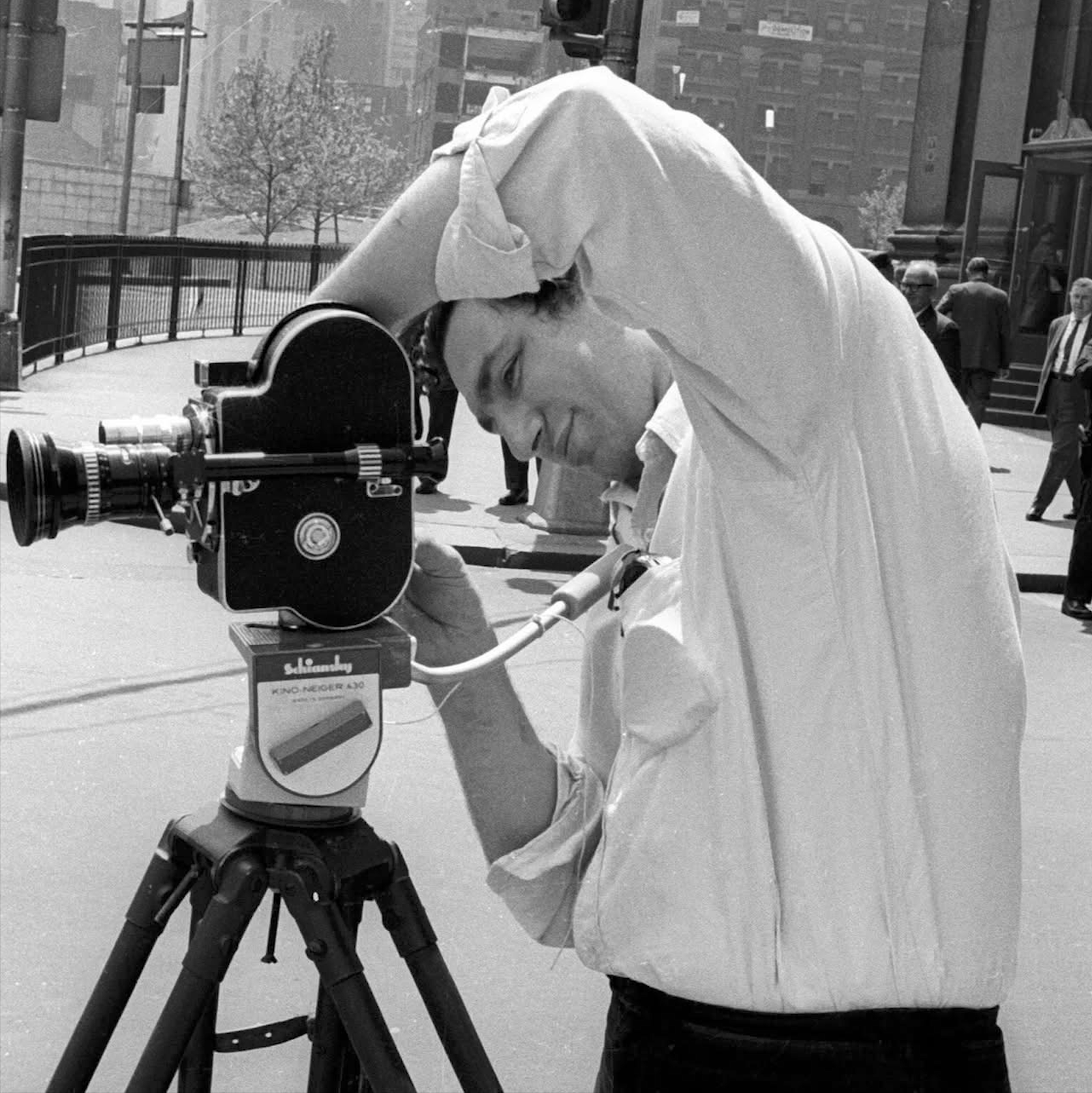
Ken Jacobs
One of the founders of the American avant-garde cinema, Ken Jacobs (1933 — 2025) worked ceaselessly and boundlessly in film, video and moving image performance for over fifty years. Jacobs began working in a mode of guerilla cinema, shooting anarchic and exuberant – yet also politically astute – theatrics in the streets of his native New York in the early 1950s, including a number of prescient and Beat infused works – Little Stabs at Happiness, the shorts included in The Whirled – made with a very young Jack Smith.
Fascinated with early cinema and experimental film from a young age, Jacobs gradually turned to found footage as a dominant inspiration, a breakthrough marked by his seminal deconstruction of cinematic narrative and illusionism Tom, Tom the Piper’s Son (1969), which famously manipulates and expands a 1905 film of the same name to create a breathless and revelatory work of pure cinema. Early “primitive” cinema, and increasingly, nineteenth century photography, has remained a touchstone in Jacobs’ work and a principal tool to launch an extended critique of the aesthetic, ideological and technological limits defining film and the cinematic apparatus itself.
Perfect Film
16mm, B&W, Sound, 22 mins, 1986
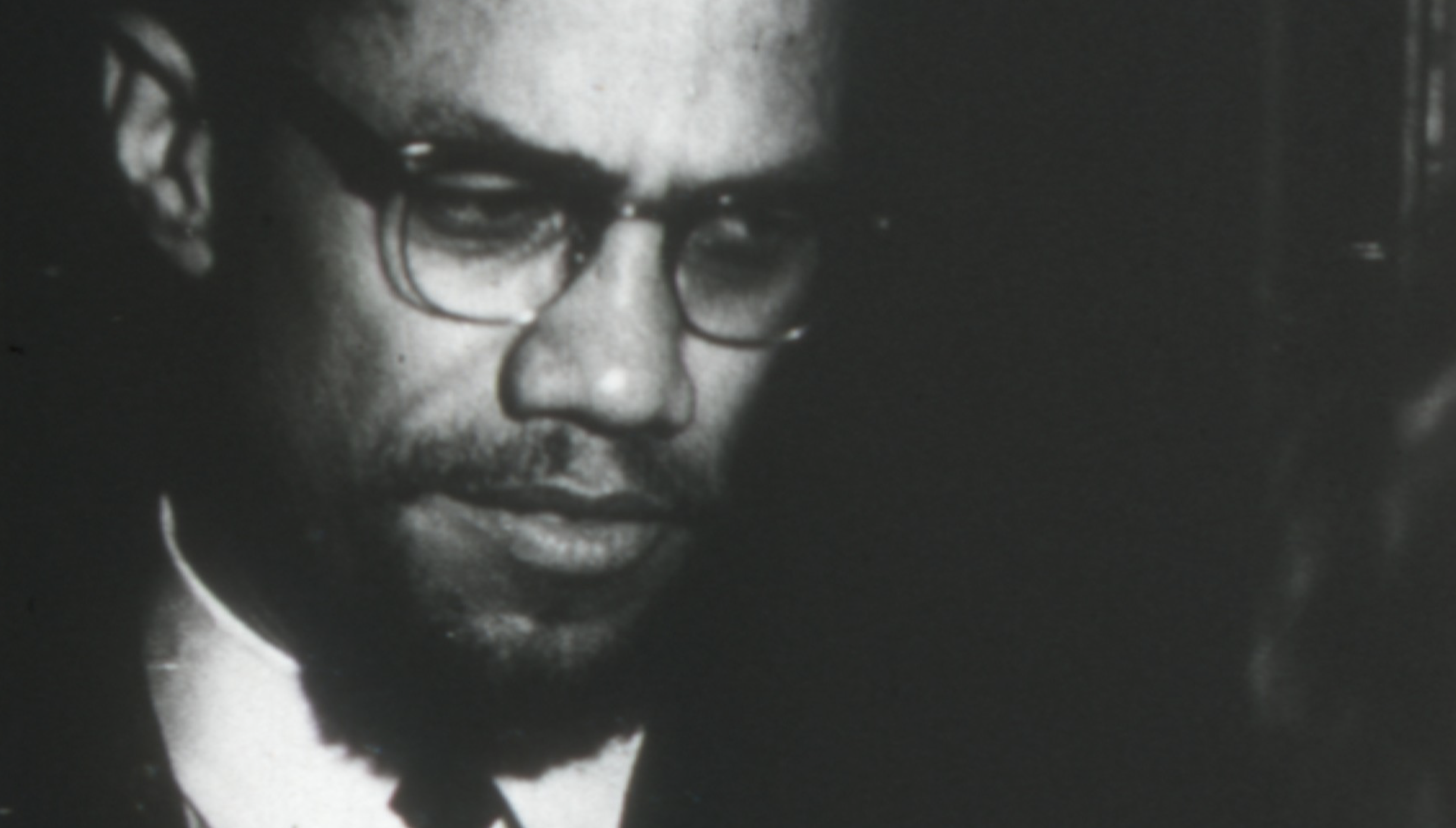
TV newscast discard 1965; reprinted as found (maybe in Canal St. bin, I forget) with exception of boosting volume second half. A lot of film is perfect left alone, perfectly revealing in its un- or semi-conscious form. I wish more stuff was available in its raw state, as primary source material for anyone to consider, and to leave for others in just that way, the evidence uncontaminated by compulsive proprietary misapplied artistry, 'editing', the purposeful 'pointing things out' that cuts a road straight and narrow through the cine-jungle; we barrel through thinking we're going somewhere and miss it all. Better to just be pointed to the territory, to put in time exploring, roughing it, on our own. For the straight scoop we need the whole scoop, or no less than the clues entire and without rearrangement. O, for a Museum of Found Footage, or cable channel, library, a shit-museum of telling discards accessible to all talented viewers/auditors. A wilderness haven salvaged from Entertainment. –K. J.
Tom, Tom, The Piper's Son
16mm, Color + B/W, Silent, 115 mins, 1969
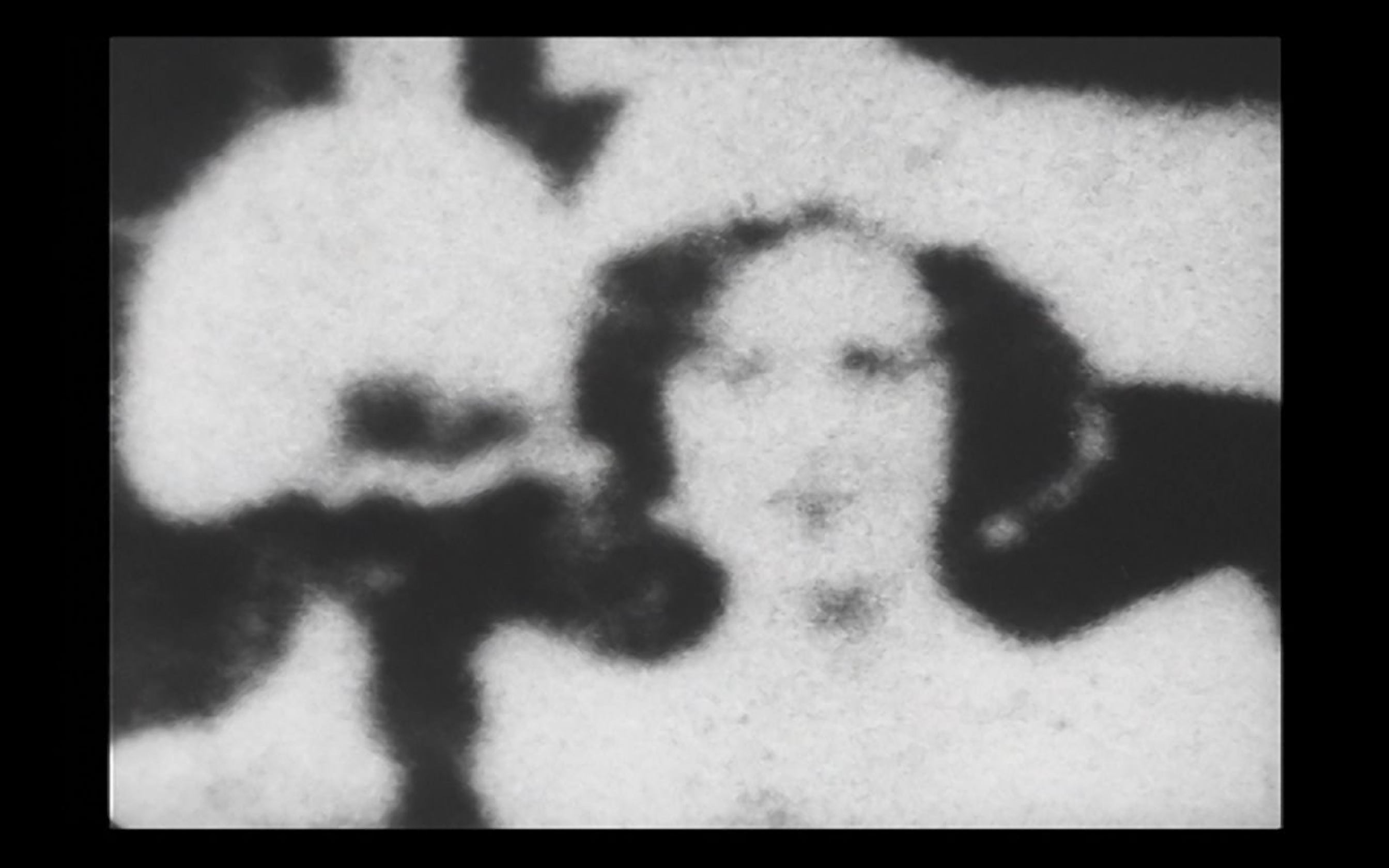
"Cinematography ass't., Jordan Meyers. Negative-matching assistance by Judy Dauterman. Original 1905 film shot and probably directed by G. W. 'Billy' Bitzer, rescued by Kemp Niver via a paper print filed for copyright purposes with the Library of Congress. Reverently examined here, a new movie almost incidentally comes into being. Ghosts! Cine-recordings of the vivacious doings of persons long dead. The preservation of their memory ceases at the edges of the frame (a 1905 hand happened to stick into the frame. . . it's preserved, recorded in a spray of emulsion grains). One face passes 'behind' another on the two-dimensional screen. The staging and cutting is pre-Griffith. Seven infinitely complex cine-tapestries comprise the original film and the style is not primitive, not uncinematic, but an inspired indication of a path of cinematic development whose value has only recently been rediscovered.
My camera closes in only to better ascertian the infinite richness (playing with fate, taking advantage of the loop-character of all movies, recalling and varying some visual complexes again and again for particular savoring), searching out incongruities in the story-telling (a person, confused, suddenly looks out of an actor's face), delighting in the whole bizarre human phenomena of story-telling itself and this within the fantasy of reading any bygone time out of the visual crudities of film: dream within a dream! And then I wanted to show the actual present of film, just begin to indicate its energy. A train of images passes like enough and different enough to imply to the mind that its eyes are seeing an arm lift, or a door close:
I wanted to 'bring to the surface' that multi-rhythmic collision-contesting of dark and light two-dimensional force-areas struggling edge to edge for identity of shape. . . to get into the amoebic grain pattern itself-a chemical disdispersion pattern unique to each frame, each cold still. . . stirred to life by a successive 16-24 f. p. s pattering on our retinas, the teeming energies elicited ( the grains! the grains!) then collaborating, unknowling and ironically, for form the always-poignant-because-always-past illusion. Important: this film MUST be projected BIG and BRIGHT and IN FOCUS"
-K. J Projected quarterly at The Anthology Film Archives of New York
Tom, Tom, the Piper’s Son “is centered on the projection of a film made in 1905 (possibly by Bitzer, Griffith’s cameraman) on the narrative of the nursery rhyme (‘Tom, Tom, the Piper’s son, stole a pig and away he run’). Jacobs, rescuing the film from the ashcan of history to which it had been consigned, first offers the film in extenso, then proceeds, with the use of an analytic projector, to reshoot the film for one hour […]. Tom, Tom is, in fact, a demonstration of the amorous caress of this early object of desire, the cinema, through the use of close-up, slow motion (combined with panning and changes of angle), masking, and freeze-frame.” (Michelson 2017: 67 and 69)
“After 100 minutes of formal manipulation, the film concludes by showing the complete 1905 film a second time. The effect is remarkable, as the film is transformed – but now, not on screen by Jacobs, but by spectators in their consciousness.” (Zryd 2011: 255)
“Usually, we consume our films too fast. We take them twenty-four frames a second, and go from one to the next. I’m interested in chewing and tasting, really slowing down the process of consuming, so that the experience is actually delectable. I want to see how much flavor is possible.” (Ken Jacobs, Interview with Scott MacDonald 1998: 383)
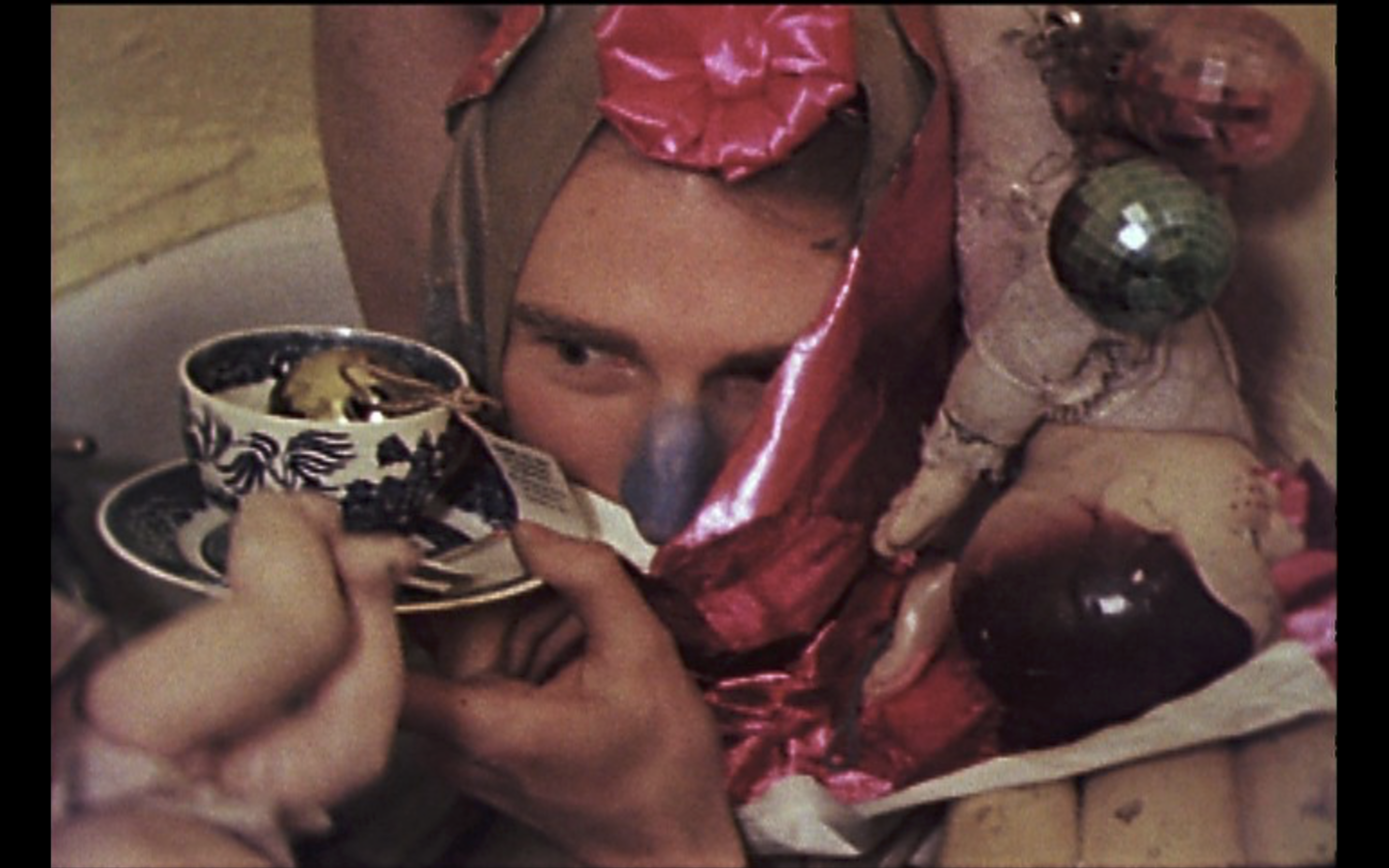
Little Stabs at Happiness
16mm, Color, Sound, 15 mins, 1962
Featuring Jack Smith. Material was cut in as it came out of the camera, embarrassing moments intact. 100' rolls timed well with music on old 78s. I was interested in immediacy, a sense of ease, and an art where suffering was acknowledged but not trivialized with dramatics. Whimsy was our achievement, as well as breaking out of step.
RPM FESTIVAL Foundation is a 501(c)(3) organization that depends on grants and donations.
Please consider making a tax deductible gift.
Partners & Sponsors
Revolutions Per Minute Festival is co-hosted by Art and Art History Department and Cinema Studies at UMass-Boston,
MFA Boston, Goethe-institut Boston, Brattle Theatre in Cambridge & Harvard FAS CAMLab.
RPM Festival 2025-2026 presented with the support of a Festivals Grant from the Massachusetts Cultural Council.
RPM Series at Boston City hall presented with the support of a grant from Mayor's Office of Arts & Culture.
The RPM Awards are co-presented with the Cinelab, Boston.